Series Overview
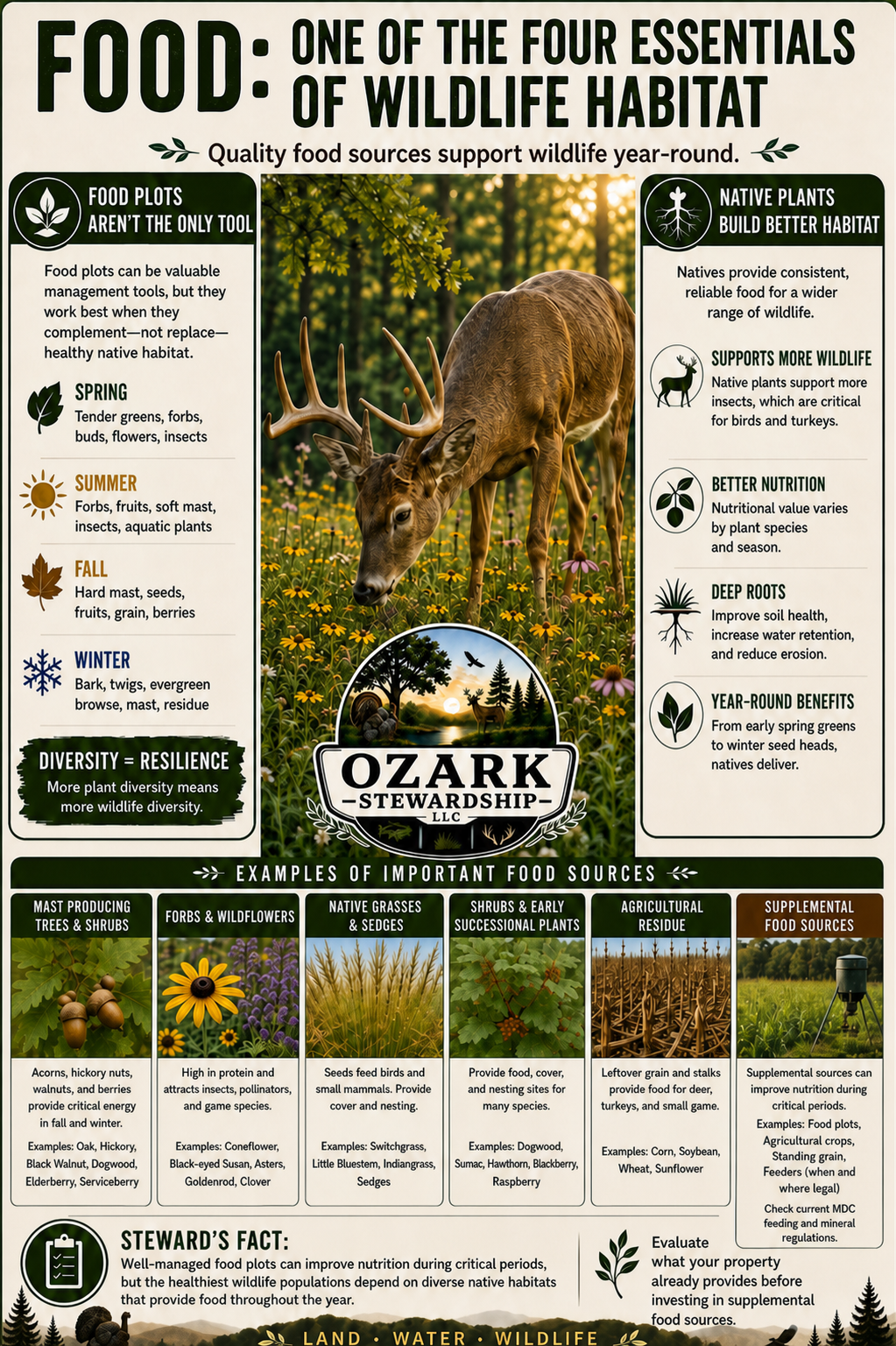
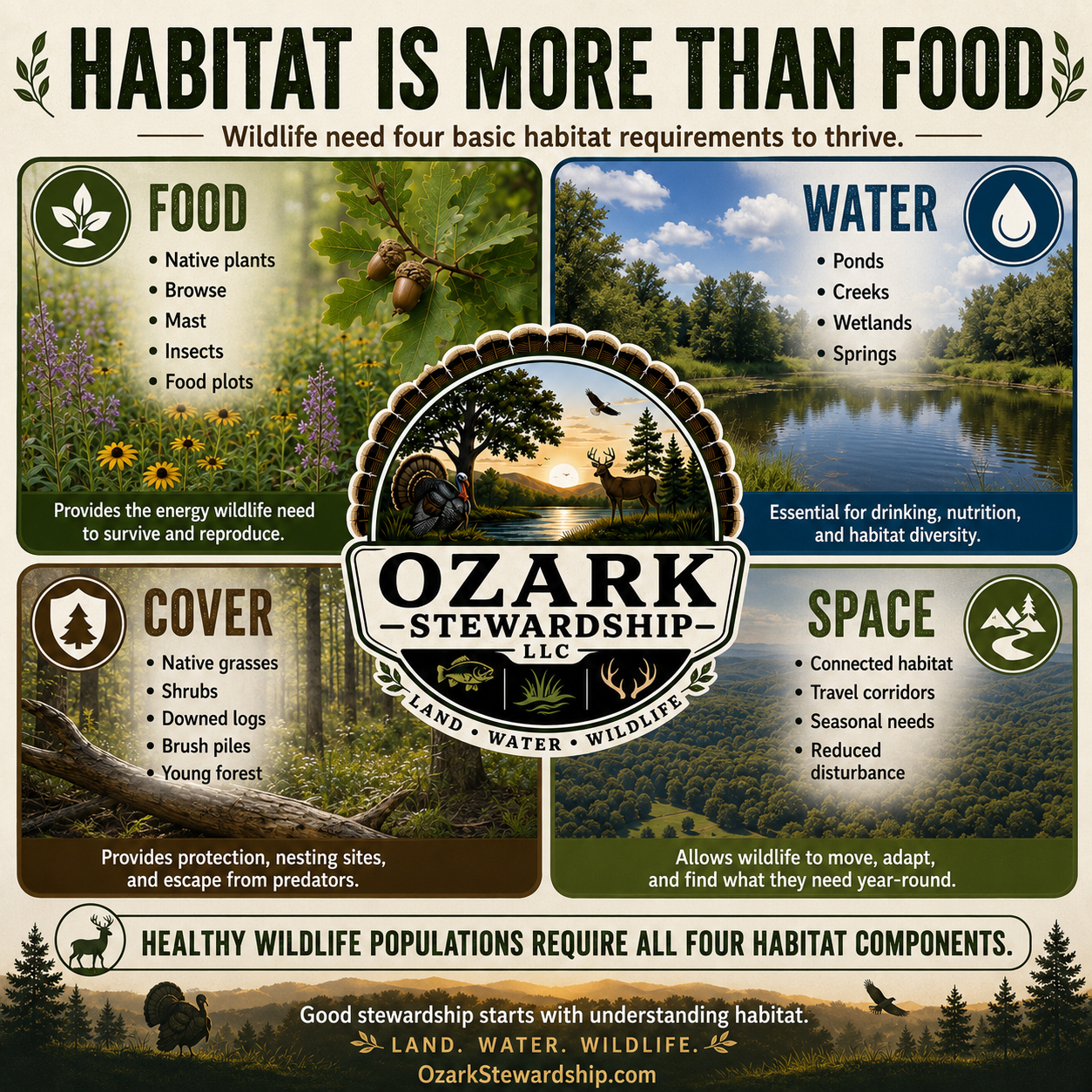
Habitat is more than food.
One of the biggest misconceptions in wildlife management is that improving habitat simply means planting food plots.
Food is important—but it is only one piece of the puzzle.
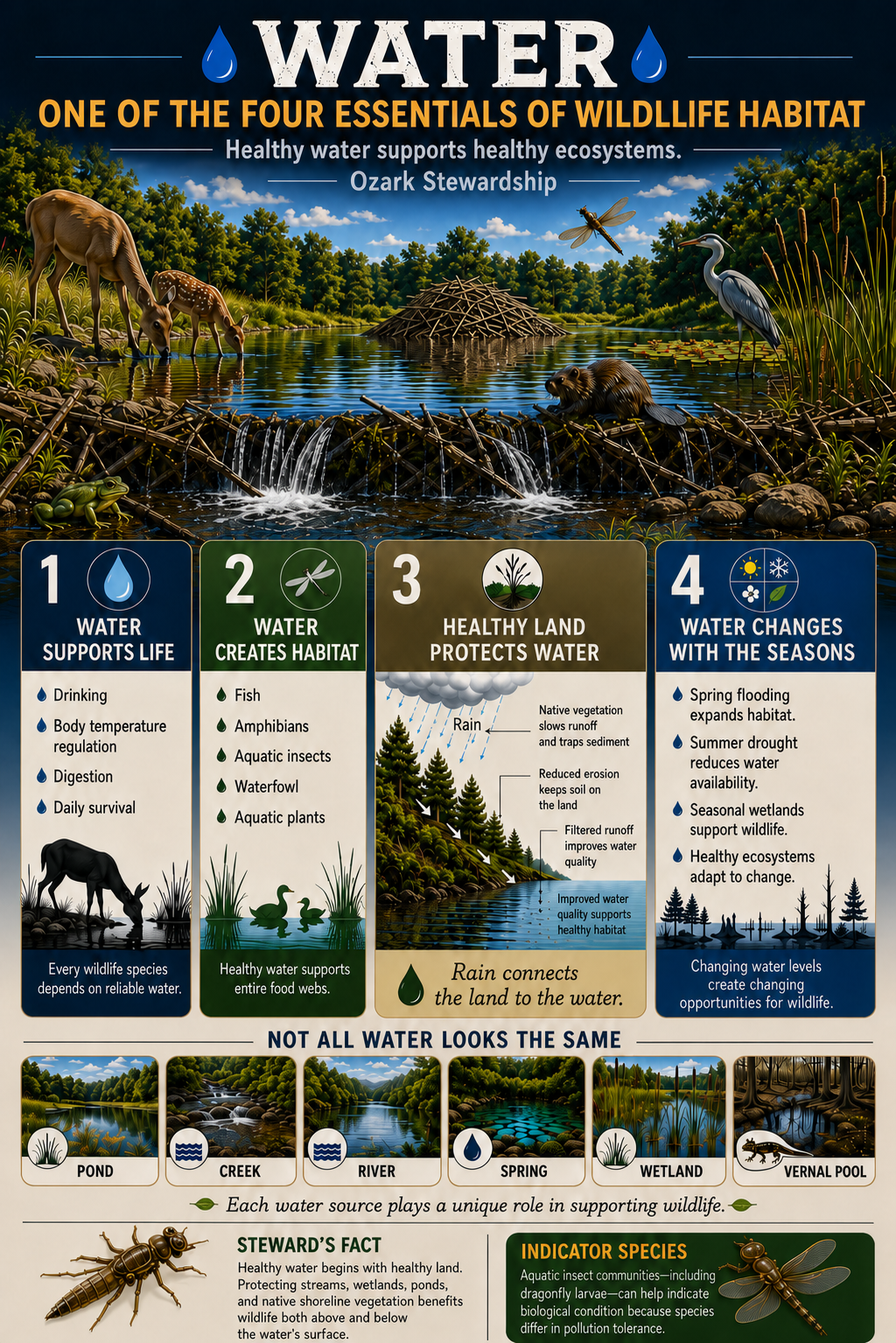
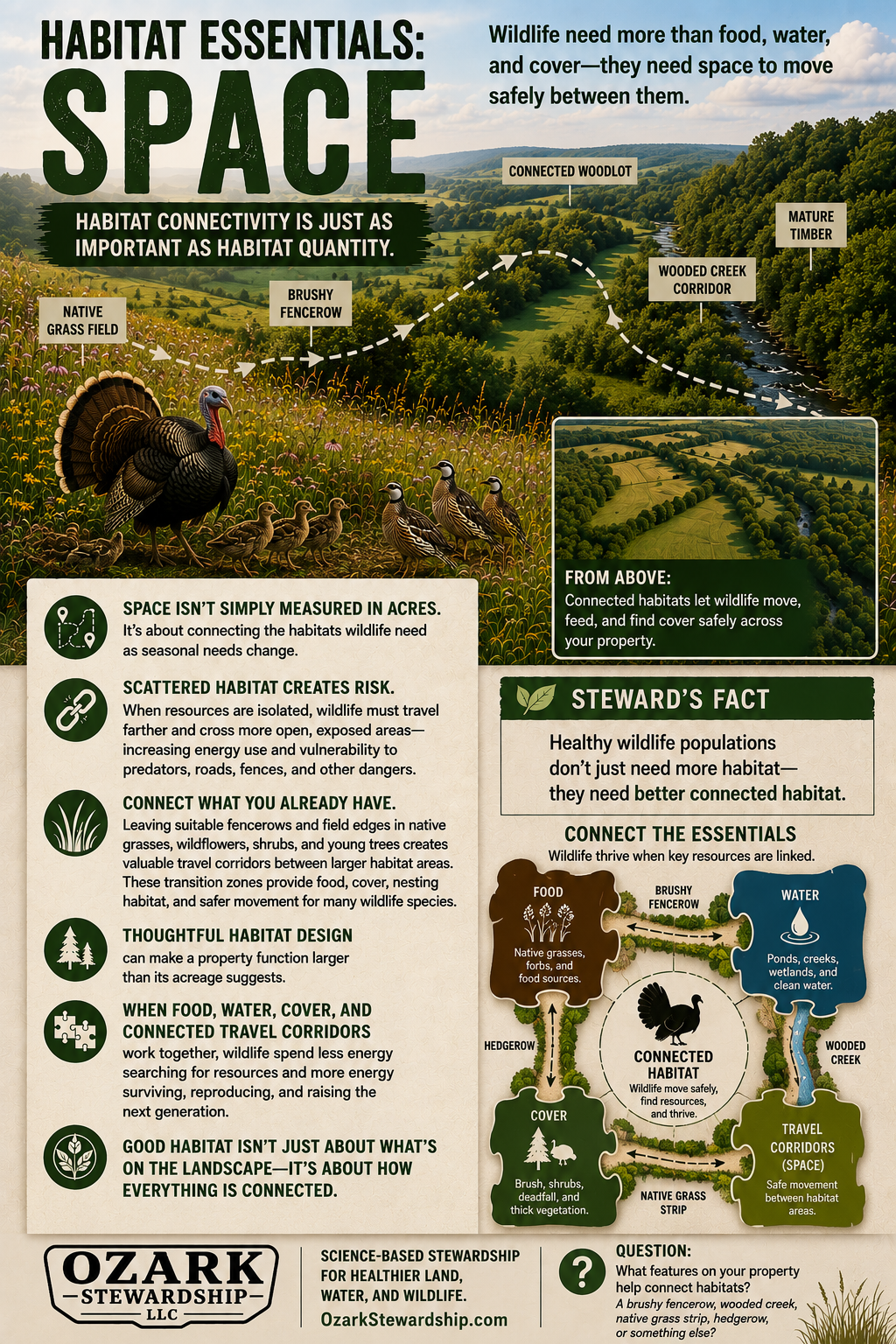
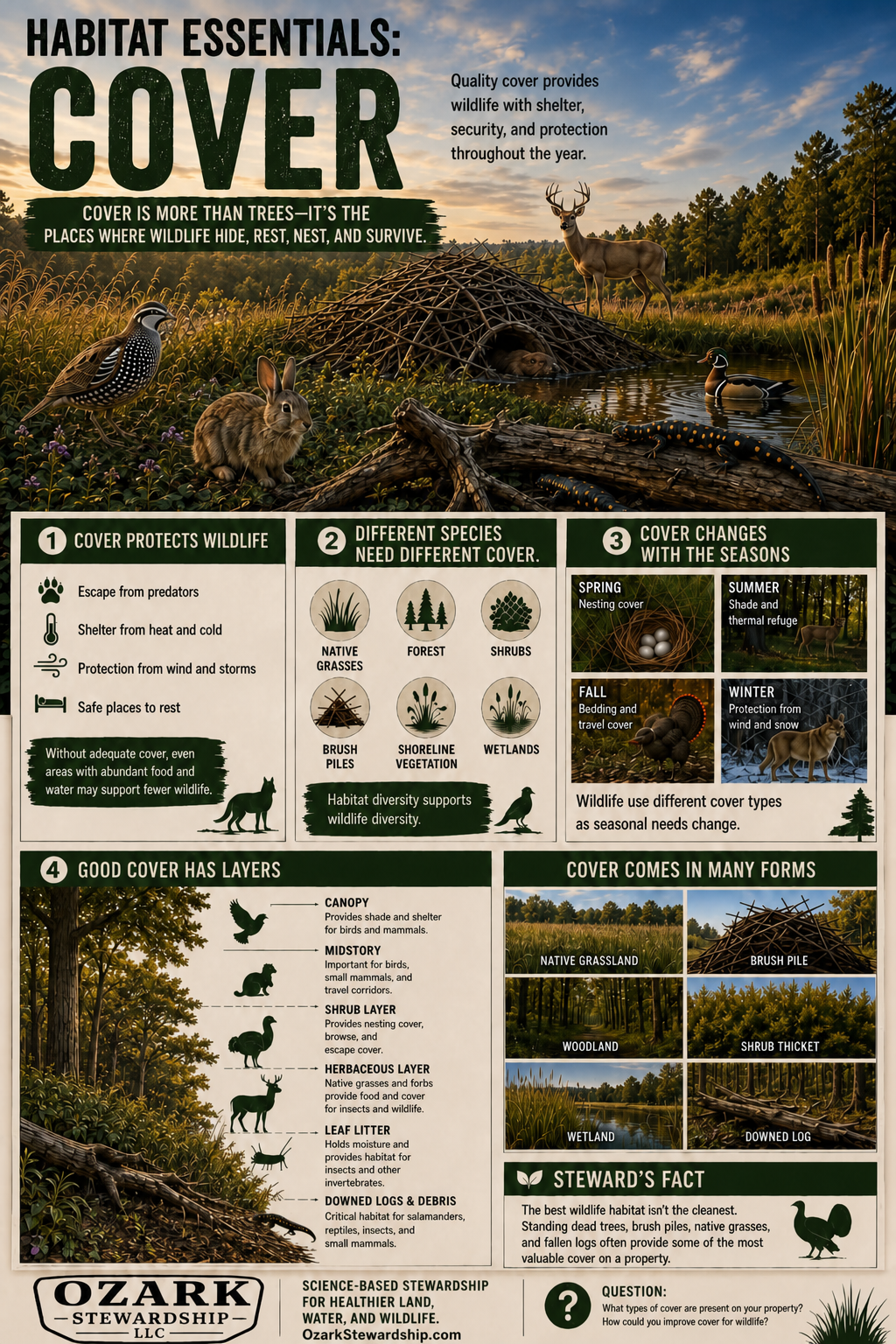
Wildlife need four basic habitat requirements:
- Food — Native plants, browse, seeds, mast, insects, and forbs.
- Water — Streams, ponds, seeps, wetlands, and even seasonal pools.
- Cover — Areas for nesting, bedding, escaping predators, and protection from harsh weather.
- Space — Enough quality habitat to meet the needs of a species throughout the year.
Many properties already have plenty of food but lack quality cover. Others have excellent cover but very little diversity in plant communities. The best wildlife habitat provides a balance of all four requirements.
Rather than asking, “What should I plant?” a better question is: “What is my property missing?”
That is where a habitat assessment can make the biggest difference.
Long-form article
Supporting article planned
This area is reserved for a future in-depth article without changing the card or page layout.
References & recommended reading
- MDC: Evaluating Your Land’s Habitat Potential
- MDC: Assessing the Wetlands—food, water, shelter, and space
Related Ozark Stewardship content
Land & Wildlife services · Healthy Land Starts from the Ground Up